


Proudly supported by


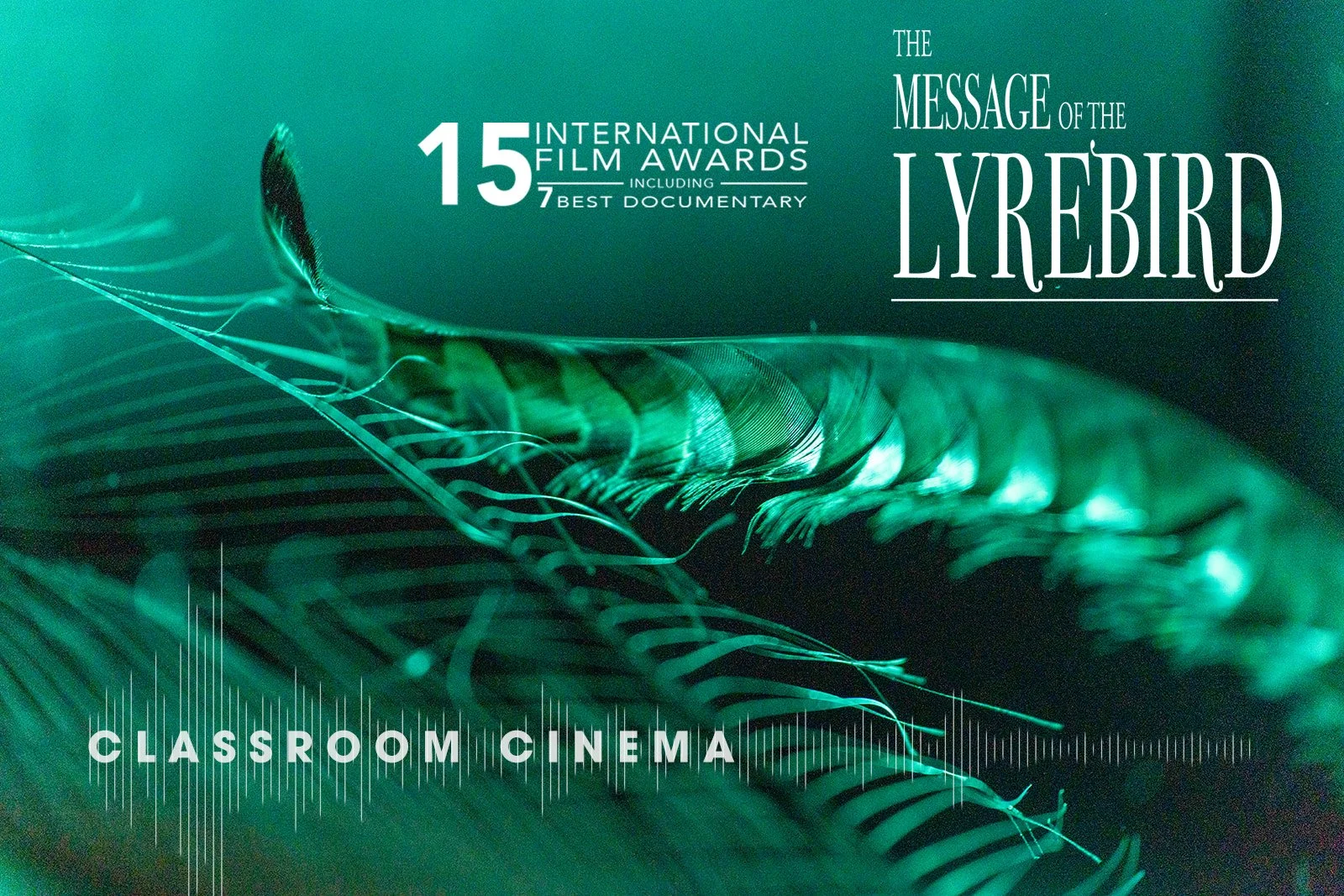

The Message of the Lyrebird is an award-winning documentary that explores the intricate web of life within Australia’s forests, focusing on the lyrebird as a symbol of ecological harmony. The film highlights the interconnectedness of nature, science, and culture, emphasising the role of sound and mimicry in nature’s communication systems. It invites viewers to listen deeply to the environment and recognise their place within the natural world.
Take your class on a fascinating journey deep into the native forests of Australia, where a scientist, a study group, a lyrebird sound recordist, a lyrebird keeper, an activist, and a Knowledge Holder descended from the People of the Lyrebird help us understand not only the lyrebird’s sophisticated artwork, but what its message may be for humanity.
Suitable for: Primary (Grade 5 & 6) and secondary (Years 7 - 12 ) Duration: 60min
Genres: Education/Documentary/Family Classification: General Audiences
Curriculum Links:
The Message of the Lyrebird is suitable for students in Years 5-6 and 7-12 in the following learning areas:
English
Media Arts
Science
Humanities and Social Sciences (Geography)
Topics explored:
Human responsibility for the natural world
Habitat loss and destruction
Intelligence of nature
Human cultures coexisting with wildlife
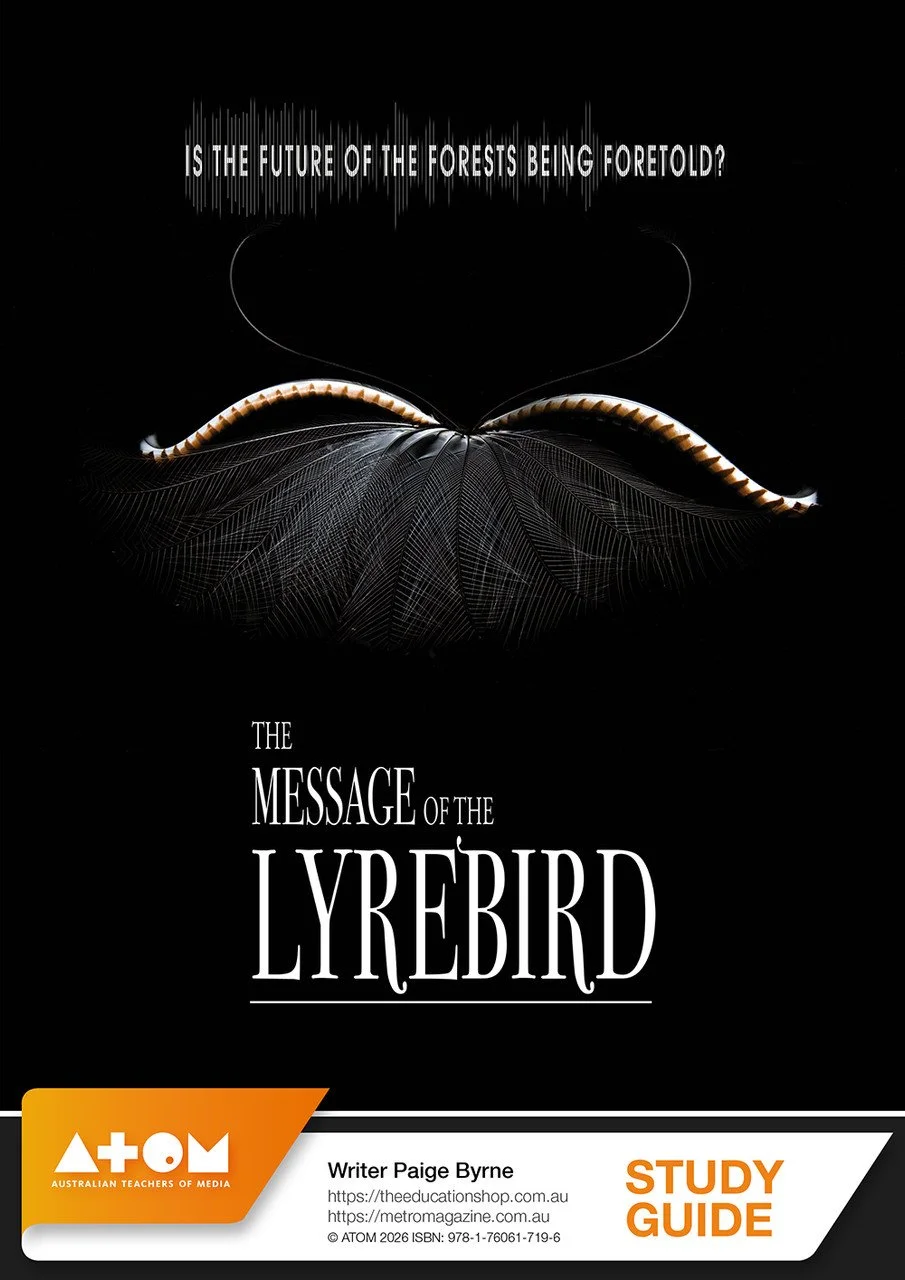
The ATOM Study Guide is now available to download for FREE (limited time) from The Education Shop. This initiative is proudly supported by the Wilderness Society and BirdLife Shoalhaven.
“I was genuinely blown away by how this film interconnects with multiple key learning areas across the Australian Curriculum. Its breadth and depth make it an outstanding educational resource, supporting cross-curricular priorities and aligning seamlessly with the senior Geography syllabus and related learning outcomes.”
— Kate Spry, NSW Youth and Education Landcare Coordinator
“The Message of the Lyrebird claimed ‘1st Place Commercial Film’ at our 38th Animal Behavior Society Film Festival. The film gives students and educators an inside look at how animal behaviour is studied in the wild and the passion behind the scientific work.”
— Barbara Clucas, Associate Professor, Department of Wildlife, Cal Poly Humboldt, California (previously known as Humboldt State University)
“We have had an absolutely wonderful experience with our Year 5 students using the film as part of their Green Patch lessons. While watching, the boys sketched lyrebirds and annotated many of the fascinating facts they discovered about these remarkable creatures.
The film has been a fantastic resource to support our Unit of Inquiry on animal adaptations. The boys were particularly captivated by the lyrebird's extraordinary ability to mimic sounds and the important role mimicry plays in the male's courtship displays. They were equally fascinated by the complexity of the lyrebird's brain and its capacity to reproduce such a diverse range of sounds with incredible accuracy. This sparked a competition to see who could perform the most convincing mimicry of their favourite bird.”
— Melinda Bargwanna, Trinity Junior School Summer Hill, NSW
REGISTER TO STREAM THE FILM
(available for teachers, librarians, education staff and parents)
FREE EDUCATION MEDIA RESOURCE (ALL AGES)
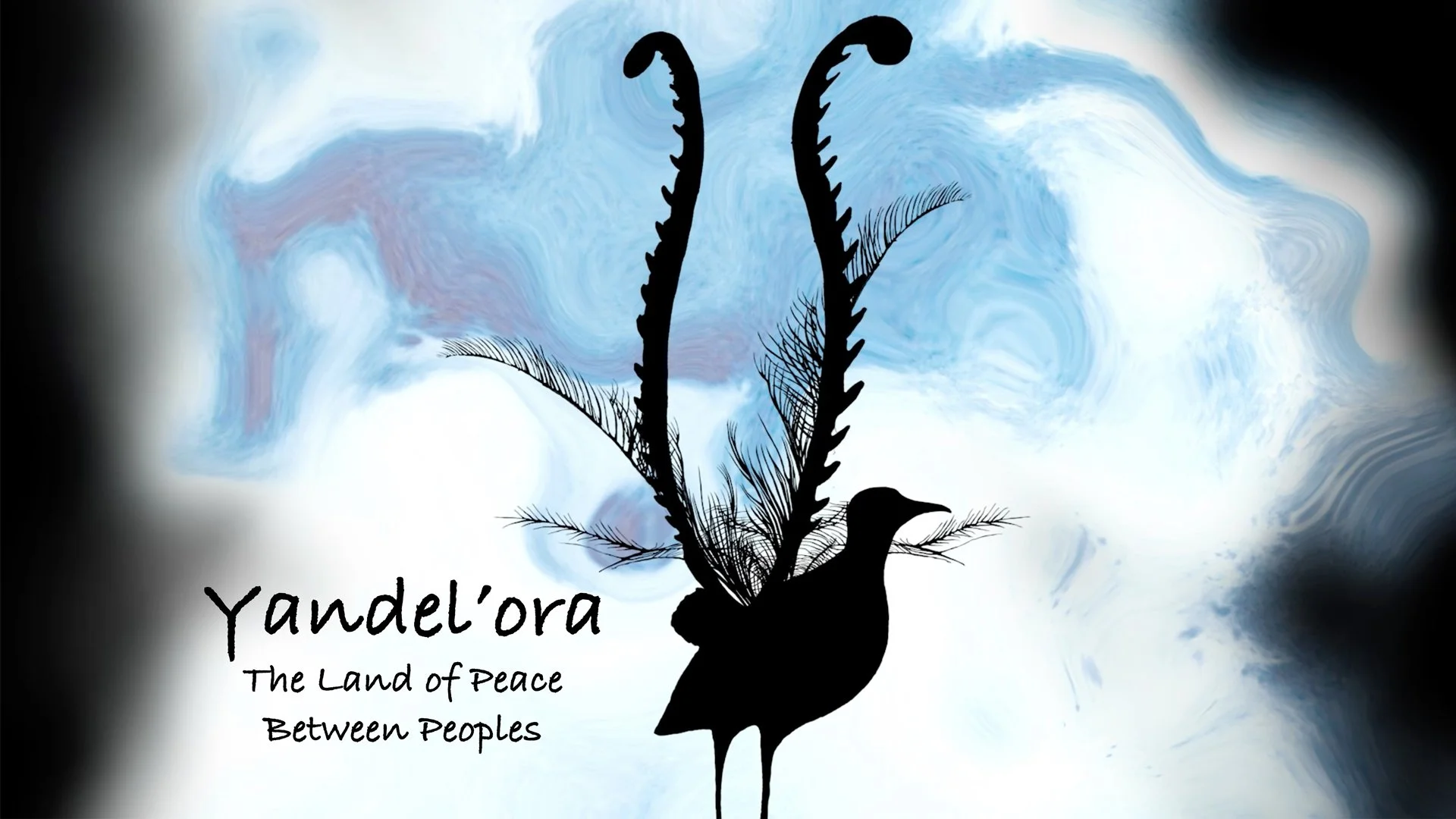
YANDEL’ORA ‘THE LAND OF PEACE BETWEEN PEOPLES’
Yandel’ora, translated as ‘‘The Land of Peace Between Peoples’’ is a D’harawal Dreaming story that illustrates why only the lyrebird can speak all languages and how the lyrebird became the interpreter and peacemaker.
The story is preceded with an introduction of the Yandel’ora, and Frances Bodkin (Aunty Fran) a descendant of the Bidigal clan of the D’harawal Peoples (with ancestral and spiritual links to Wiritjiribin - the First Lyrebird).
Run time: 9 minutes
Additional educational resources about the Yandel’ora story, including academic papers; text documents; videos; and picture book have been documented by members of the D’harawal Traditional Descendants and Knowledge Holders Circle.


“To look to tomorrow you must first know yesterday…”
—Frances Bodkin, Knowledge-Holder
D’harawal Peoples of the Lyrebird
